Meal Prepping 101: What You Need and How To Start
This post may contain affiliate links. For more information, please see our disclosure policy.
Meal prepping sounds wonderfully organized, doesn’t it? Rows of tidy containers. Colorful vegetables. Lunches ready to grab. Then real life walks into the kitchen.
The good news? Meal prep does not require spending all Sunday chopping 47 vegetables or eating the same chicken and broccoli until Friday. It simply means doing some food work ahead of time so your future self has fewer decisions to make.
Our meal prepping 101 resource will break down everything you need to know and explain how to start prepping your own meals.
Start With Your Typical Week
Before buying containers or making a grocery list, look at your calendar.
Which days will be hectic? When will you eat at home? Are there evenings when you already know dinner will happen somewhere else?
Meal prep works best when it responds to real life. Preparing seven dinners makes little sense if you have restaurant plans, family gatherings, or travel scheduled for half the week.
Choose a few meals that would genuinely make your week easier. Maybe you need three lunches ready for work. Perhaps breakfast causes the biggest morning scramble. Or maybe having dinner ingredients washed, chopped, and ready to cook would remove the 5:30 p.m. panic.
Pick a Meal Prep Style
There is no sacred meal prepping 101 rulebook on what you need and how to start your journey. Thank goodness. Different approaches work for different kitchens and schedules.
Prepare Complete Meals
Cook an entire dish, portion it, refrigerate it, and reheat it later. This approach works nicely for lunches and busy evenings when cooking from scratch simply is not happening.
Prep Ingredients
Wash vegetables, slice fruit, cook grains, portion proteins, or prepare ingredients that can become several meals.
Ingredient prep gives you flexibility. Tonight, those roasted vegetables might accompany chicken. Tomorrow, they can land in a grain bowl.
Use a Mix-And-Match System
Prepare a handful of ingredients that work together in different combinations.
A cooked grain might become the base of lunch. Roasted vegetables can serve as a side one evening and fill a wrap the next day. Add sauces, herbs, nuts, cheese, or something crunchy, and yesterday’s ingredients suddenly have a different personality.
Variety matters. Nobody wants lunch to feel like culinary déjà vu by Thursday.
Gather a Few Useful Tools
You do not need to remodel the kitchen before you prep your first lunch. A sharp knife, cutting board, sheet pan, skillet or pot, and dependable storage containers will cover plenty of territory.
A few extras can make the process smoother. Consider measuring cups if portion consistency helps you, reusable jars for dressings or snacks, and labels for anything that might become mysterious after a few days in the refrigerator.
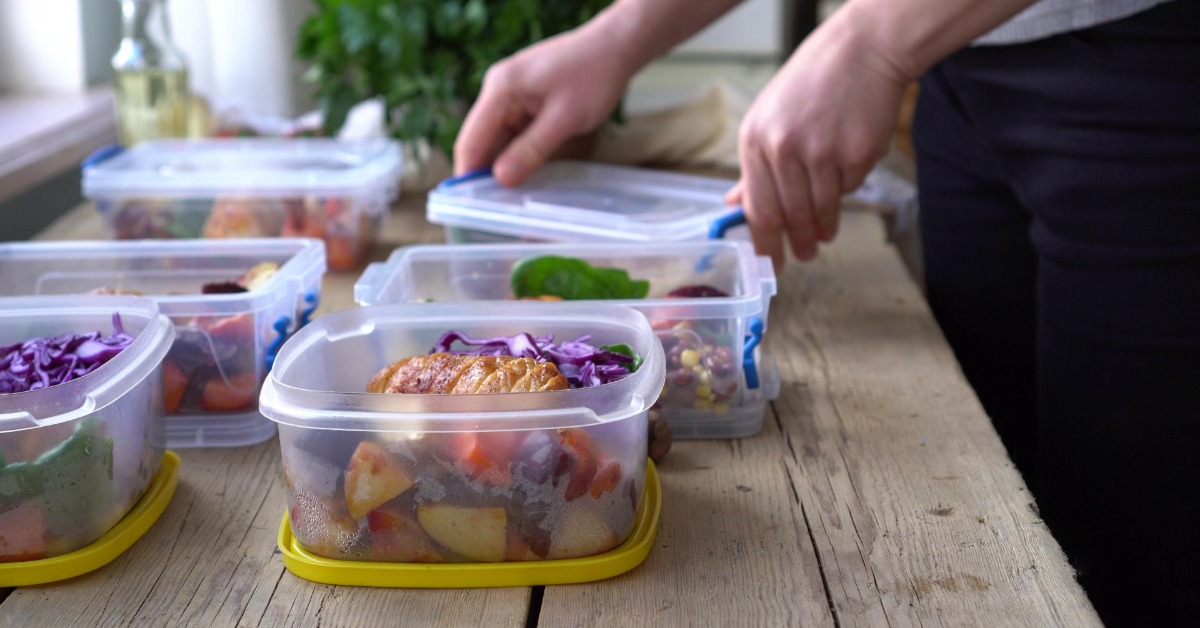
Containers deserve particular attention because storage affects how appealing prepared food feels later. Compartment containers improve meal prep because they separate the components of the meal instead of mashing them all together in a hodge-podge of food.
Choose containers that suit the foods you actually prepare rather than buying an enormous matching set simply because it looks pretty online.
Build Meals Around Components
One of the simplest ways to make meal prep manageable is to think in components instead of elaborate recipes.
Start with a protein or another substantial centerpiece. Add vegetables, a grain or starch if you enjoy one, then bring in something that adds personality, such as a sauce, fresh herbs, citrus, or seasoning.
That framework gives you plenty of room to experiment.
Chicken can pair with roasted vegetables one day and become part of a wrap another. Beans can anchor a grain bowl, salad, or quick soup. Hard-boiled eggs can move from breakfast to lunch without complaint.
Choose Foods That Hold Up Well
Some foods remain delightful after sitting in the refrigerator. Others lose their sparkle rather quickly.
Cooked grains, roasted vegetables, soups, stews, sturdy greens, beans, hard-boiled eggs, and many cooked proteins can work well for advance preparation.
More delicate ingredients may deserve last-minute attention.
Keep crisp toppings separate until serving. Add dressings when you are ready to eat if sogginess is a concern. Slice certain fruits closer to serving time if texture matters to you.
Prep in an Order That Saves Time
Once you decide what you are making, avoid bouncing randomly from task to task.
Start anything that needs the longest cooking time. While it cooks, wash produce or prepare another component. Let cooked foods cool appropriately while you finish assembling the rest.
You can also group similar jobs together. Wash vegetables at once. Do the chopping in one session. Portion ingredients after you finish cooking.
This approach reduces setup and cleanup, which may be the least glamorous part of meal prep but one of its biggest benefits.
Avoid the Seven-Day Marathon
Enthusiasm can lead new meal preppers straight into a trap: preparing practically everything they plan to eat for an entire week.
That can become exhausting fast.
Instead, begin with two or three days. See what you eat and what you ignore. Notice which foods still taste good later and which ones you would rather prepare fresh.
A shorter prep window also gives you room for spontaneous plans. If somebody invites you out for tacos on Wednesday, your refrigerator does not need to take it personally.
Make Your Refrigerator Work for You
A beautifully prepared lunch does little good when it disappears behind a gallon of milk and three jars of mustard.
Put ready-to-eat foods where you can see them.
Group breakfast items together. Keep prepared lunches in an obvious spot. Store chopped vegetables where they can quickly become snacks, sides, or dinner ingredients.
Label containers when necessary, especially if several dishes look similar.
Keep Snacks Simple
Meal prepping does not have to stop at breakfast, lunch, and dinner. A little snack preparation can make busy afternoons much easier.
Wash fruit ahead of time. Portion nuts into small containers. Keep cheese, cut vegetables, yogurt, or another favorite snack ready to grab.
Give Yourself Permission To Adjust
Your first meal prep session will teach you more than any checklist.
Perhaps you made too much rice. Maybe you discovered that pre-cut cucumbers are not your favorite by day three. You might realize breakfast prep saves you far more stress than preparing dinner.
Use that information. The best meal prepping approach grows through repetition. Each week gives you clues about portions, storage, timing, and the foods you genuinely look forward to eating.
Keep what works. Change what does not.
Start With One Small Win
Meal prep does not need to transform your entire kitchen routine overnight. Choose one area of your week and make it easier.
Prepare tomorrow’s lunch. Chop vegetables for two dinners. Assemble breakfast for the next couple of mornings. Once that feels natural, add something else.
Soon, opening the refrigerator and finding food already waiting can feel less like a domestic miracle and more like something wonderfully normal.
Start small this week, and give your future self one less thing to figure out.