Downsizing Sentimental Items: What to Do When Your Kids Don’t Want Your Stuff

This post may contain affiliate links. For more information, please see our disclosure policy.
Boomers often struggle with downsizing sentimental items when adult children don’t want family heirlooms. Practical ideas for letting go.
When Our Kids Don’t Want Our “Treasures”: A New Chapter in Downsizing
One of the hardest lessons many of us discover while downsizing is this:
The things we carefully saved for decades are often the very things our adult kids don’t want.
The china cabinet.
The antique furniture.
Boxes of keepsakes.
Handmade linens and heirlooms.
For many boomers, these objects were meant to be part of our legacy. We imagined them moving forward through the family, carrying memories of holidays, gatherings, and the people who came before us.
So when our children gently say, “Mom… we don’t need that,” it can feel surprisingly emotional.
But this moment isn’t really about rejection. It’s about generational change and learning new ways to honor the past while moving forward.
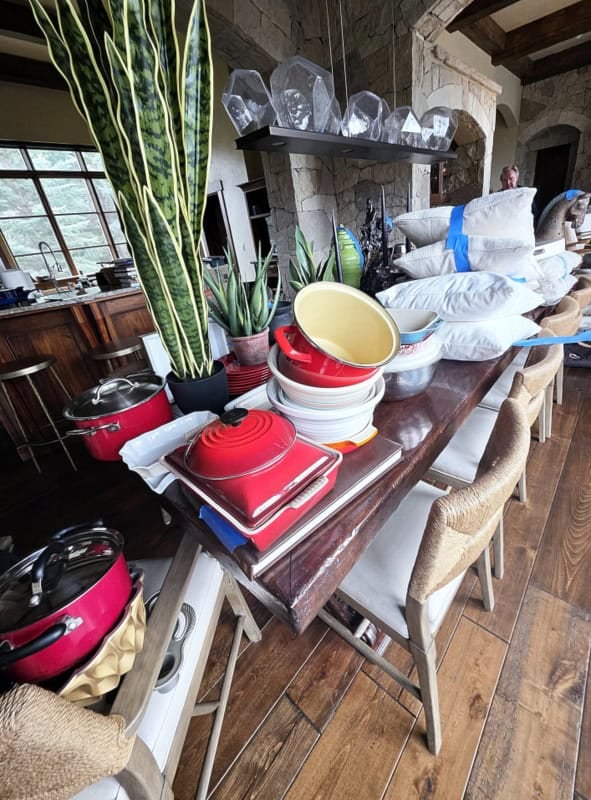
Why Younger Generations Often Don’t Want Family Heirlooms
Many boomers grew up during a time when saving and preserving things was part of everyday life.
Parents and grandparents lived through scarcity. Objects represented security, stability, and family history. Passing things down was natural.
But younger generations grew up in a different environment.
Many Millennials and Gen X families:
- Move more frequently
- Live in smaller homes or urban spaces
- Value flexibility and minimalism
- Prefer experiences over possessions
It’s not that they don’t value family history.
They simply express that value differently.
Often what they want most are the stories, photographs, and memories, not necessarily the physical objects themselves.
Understanding that shift can help soften the emotional impact of downsizing.
Step One: Separate the Memory From the Object
One of the most powerful things you can do when letting go of meaningful items is preserve the story behind them.
Consider:
- Photographing heirlooms or meaningful items
- Writing a short note about where the object came from
- Recording a short voice memo telling the story
For example, if you have a crocheted tablecloth your mother made, you might photograph it and write:
“My mother made this tablecloth in the winter of 1962. It was on our dining table for every Christmas dinner growing up.”
The story becomes the heirloom.
Objects can be lost or given away, but stories can live on indefinitely.
Step Two: Offer the Items Without Pressure
Sometimes adult children hesitate to accept items because they feel obligated.
Instead of framing it as an inheritance, try offering things more casually.
For example:
- “Is there anything here that speaks to you?”
- “If you’d like something, take it. If not, that’s okay too.”
This approach removes pressure and often leads to more honest conversations.
Sometimes children do choose one or two meaningful items when the decision feels relaxed rather than expected.

Step Three: Let Treasures Continue Their Story Elsewhere
When an item no longer fits your life or your children’s lives, it doesn’t mean its story has to end.
Many treasures find beautiful second lives through:
- Local charities or shelters
- Young families starting out
- Community groups
- Vintage or antique collectors
- Historical societies
Handmade or antique items are often deeply appreciated by someone who has been searching for exactly that piece.
Letting an object continue being used can transform the feeling from loss to continuation.
Step Four: Consider Transforming Special Items
Some heirlooms can be adapted into something smaller or more practical.
Examples include:
- Turning a tablecloth into pillows or a table runner
- Framing a section of handmade fabric or needlework
- Creating a memory quilt from meaningful textiles
- Repurposing jewelry into a new piece
This allows the craftsmanship and memory to remain present while fitting better into modern lifestyles.
Step Five: Keep One Meaningful Symbol
Sometimes the most comforting approach is keeping one symbolic item that represents a larger collection or memory.
One ornament from decades of holiday decorations.
One piece of china from a large set.
One letter or photograph from a box of papers.
A single object can hold the emotional meaning of many others.
And it allows the home to feel lighter while still honoring the past.
Downsizing Is Really About Life Transitions
Letting go of treasured belongings isn’t just a practical task.
It’s a reflection of something deeper.
Downsizing often invites us to ask:
- What truly matters now?
- What memories do I want to preserve?
- How do I carry the past forward without carrying everything?
The surprising discovery for many people is that what remains most meaningful is not the collection of objects.
It’s the life lived around them.
The dinners shared.
The holidays celebrated.
The conversations around the table.
Those are the real heirlooms.
And fortunately, those are the things our children still want most.
The Real Treasures Were Never the Things
Letting go of meaningful possessions can feel emotional at first.
But downsizing isn’t about erasing the past. It’s about honoring it while making room for the life you’re living now.
The dishes, furniture, and keepsakes carried your story for many years. Now the memories, the lessons, and the love you shared carry it forward.
And those are the treasures your family will always keep.